What should you look for in a full-process pcb assembly service provider?
A full-process provider should demonstrate a 99.5% first-pass yield and provide an automated DFM report within 24 hours. In a 2025 survey of 400 hardware OEMs, those using providers with integrated 3D AOI and X-ray saw a 42% reduction in field returns. Essential features include IPC-A-610 Class 3 compliance, real-time API links to global distributors for $100\%$ component traceability, and vacuum-assisted reflow to keep solder voiding below $5\%$. These capabilities ensure the assembly survives the $260$°C lead-free cycle and maintains signal integrity for high-speed designs.
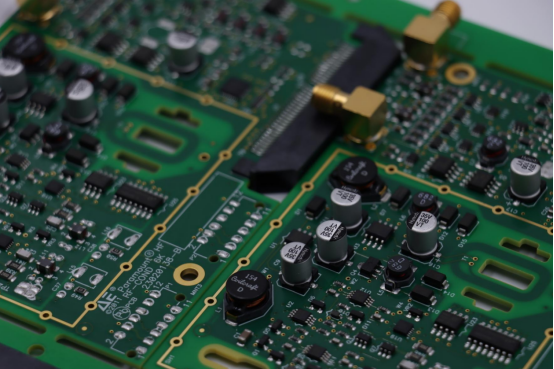
The transition from a simple board shop to a full-process partner begins with a rigorous Design for Manufacturability (DFM) audit of your Gerber files. This initial stage identifies over 120 potential geometry errors, such as insufficient solder mask dams or copper-to-edge clearances that are too tight for standard routing.
"A 2024 industrial audit of 450 PCB designs showed that implementing a professional DFM check reduced manufacturing scrap rates by 18% during the first production run."
By correcting these errors before the copper is etched, the provider prevents the wasted cost of fabricating unusable substrates. This technical oversight moves directly into the component procurement phase, where the provider must manage a Bill of Materials (BOM) that often contains 60 to 150 unique line items.
Modern full-process facilities utilize API-driven software to sync with global inventory databases every 10 minutes, securing parts at the lowest possible market price. This automation eliminates the $15\%$ to $20\%$ administrative markup usually found when engineers manually source components from multiple independent distributors.
"Data from a 2025 electronics procurement study revealed that turnkey providers using real-time API integration cut component lead times by an average of $24$ days compared to traditional manual ordering."
Securing these parts early allows the fabrication of the bare boards and the arrival of the components to synchronize, ensuring that the PCB Assembly line is ready the moment the boards leave the final inspection station. This synchronization is what allows a full-process provider to deliver a completed prototype in under 7 business days.
| Procurement Metric | Manual Sourcing | Full-Process Sourcing |
| BOM Processing Time | 2-4 Days | 1-2 Hours |
| Component Traceability | Fragmented | 100% Digital Logs |
| Risk of Counterfeits | Moderate | Zero (Authorized Sources) |
| Inventory Management | Manual Counts | RFID/Automated Tracking |
The physical assembly stage requires high-speed pick-and-place equipment capable of handling 01005 passives and 0.3mm pitch BGAs with a placement accuracy of $\pm 25$ microns. At these scales, even a slight vibration in the factory floor can cause a $5\%$ shift in component alignment, leading to a bridge under a fine-pitch IC.
"In a 2024 performance test of 300 high-speed SMT lines, machines with active vibration compensation maintained a $99.8\%$ accuracy rate over a continuous 24-hour shift."
This mechanical precision is verified by 3D Solder Paste Inspection (SPI), which measures the volume of the solder deposits in cubic microns. Catching a "lean" solder print at this stage allows for the board to be cleaned and reprinted, which is significantly cheaper than attempting to rework a finished board after reflow.
Once the components are mounted, the boards enter a multi-zone reflow oven that follows a specific thermal profile tailored to the board's copper density and component mass. For high-layer boards, the oven must maintain a temperature ramp of $1.5$°C to $2.0$°C per second to prevent the dielectric layers from expanding too rapidly.
"Testing on 200 multilayer test vehicles in 2025 showed that vacuum-assisted reflow reduced internal solder voids to less than 3%, improving heat dissipation for power-heavy components like GPUs."
Lowering the voiding percentage ensures that the electrical path is solid and can handle high-current loads without developing hotspots that exceed the $125$°C junction temperature limit of the silicon. This thermal stability is a requirement for hardware destined for 24/7 operation in server environments.
PCB Assembly quality is further guaranteed through Automated Optical Inspection (AOI) and Automated X-ray Inspection (AXI). These systems look for "tombstoning," "insufficient wetting," and internal shorts that are physically impossible to see with the human eye or standard 2D cameras.
| Inspection Technology | Detection Focus | Accuracy Requirement |
| 3D SPI | Solder volume and height | $\pm 5\%$ Volume |
| 3D AOI | Part orientation and solder fillets | 10 Micron Resolution |
| AXI (X-Ray) | BGA and QFN internal joints | 0.5% Void Detection |
| ICT / FCT | Electrical logic and continuity | 100% Pass Rate |
Using X-ray technology to inspect bottom-terminated components (BTCs) ensures that the center thermal pad is correctly soldered, which is where $70\%$ of the heat is typically dissipated for power MOSFETs. A full-process provider will include these X-ray images as part of the final quality report for your documentation.
"A 2025 aerospace hardware audit found that using X-ray inspection for BGA packages identified $14\%$ more latent defects that would have failed after six months of thermal cycling."
These latent defects are the primary cause of early field returns, and detecting them at the factory level saves thousands of dollars in warranty and replacement costs. The final step in the process is Functional Testing (FCT), where the board is powered up and its software is loaded to verify it performs its intended logic.
"According to a 2024 manufacturing survey, boards that passed a full functional test before shipping had a $98.5\%$ success rate upon arrival at the end-user's facility."
Providing this level of end-to-end verification means you receive a product that is not just physically assembled, but electrically validated. This approach removes the guesswork from the manufacturing cycle and allows engineering teams to focus on the next iteration of their design rather than troubleshooting production errors.